
Southwest Florida’s real estate market in 2025 reflects Sir Isaac Newton’s Third Law of Motion: For every action, there is an equal and opposite reaction.
In residential real estate last year, home sales were flat year over year. Sales volume slowed over the past two years, compared to the two years immediately after COVID-19. But homes priced above $10 million in 2025 showed the opposite reaction: They set records in Port Royal, an exclusive, multimillion-dollar community in Naples.
In industrial real estate, there were fewer big-ticket deals in 2025, following three vibrant years, experts said. But smaller legacy industrial properties — aging assets that still hold value — showed the opposite reaction last year; they dotted the industrial real estate transaction landscape.
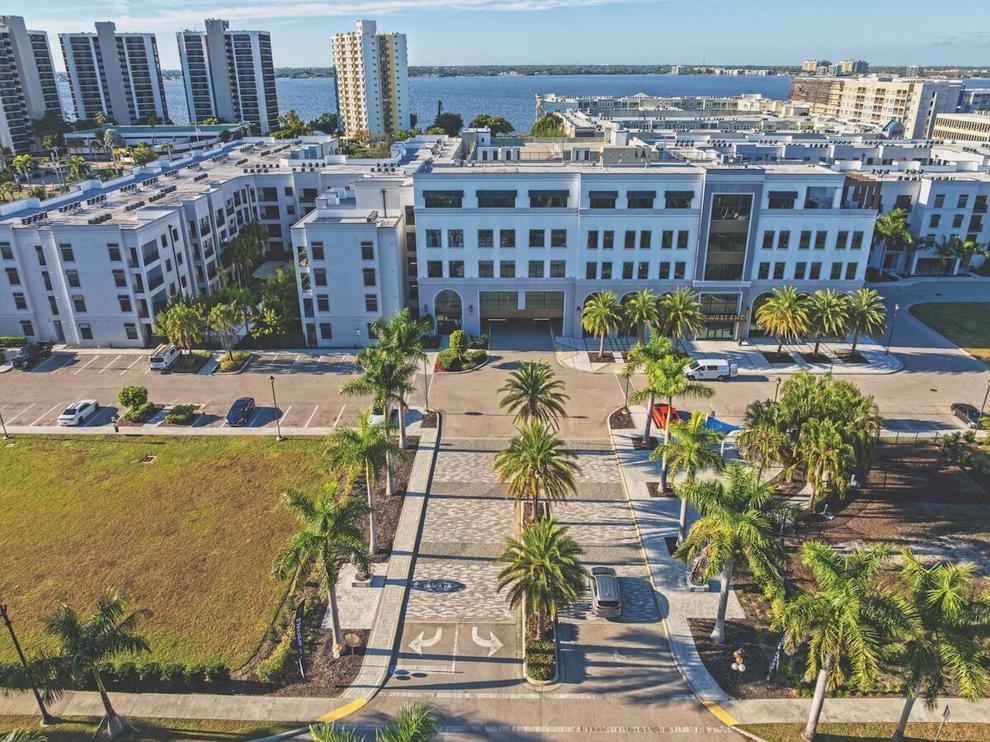
In the multifamily arena, there were few deals to report. There was only one deal of significance, and it may have reset expectations for apartment complex sales entering 2026. West End at City Walk sold for almost $10 million less than it did four years prior.
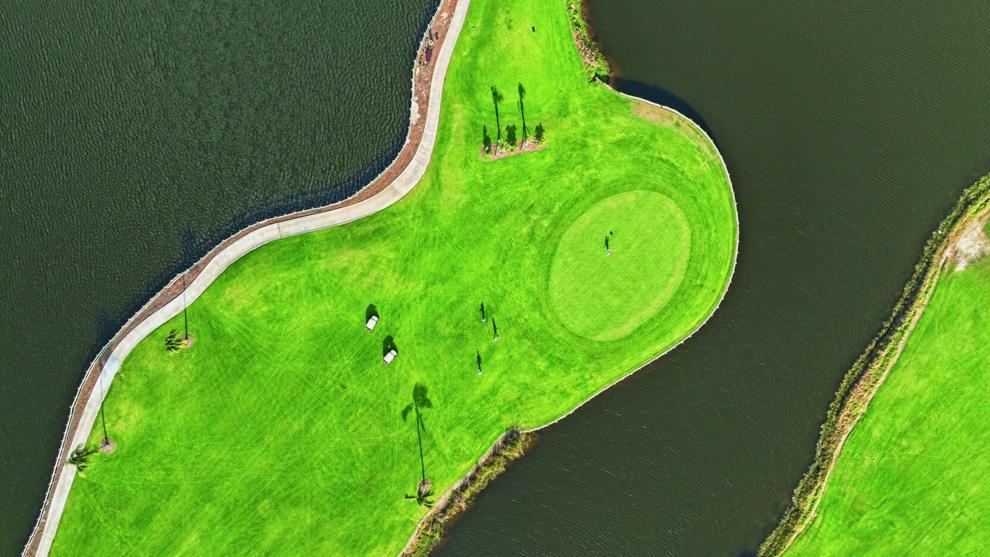
But one sector of real estate showed sustained momentum: golf courses. In Southwest Florida, a handful of courses sold for differing reasons, including two on Sanibel Island.
The drive of golf
The action of swinging a golf club 100-plus mph creates the reaction of a ball flying some 300 yards. Likewise, investors were swinging away in purchasing Southwest Florida golf courses in 2025, hoping their swings would create profits. There are about 90 golf courses in Collier County, 80 in Lee County and 13 in Charlotte County. Other than a few that are municipally owned, such as Eastwood and Fort Myers Country Club in Fort Myers, the bulk of their ownership is tied to the gated communities in which they sit as amenities. That makes the sale of a Southwest Florida golf course relatively rare.
But it happened four times last year, and once in October 2024 when Golf Club of the Everglades sold for $17.15 million to Concert Golf Partners.
In December, almost 150 acres that had been known as Majestic Golf Course in Lehigh Acres sold for $5.57 million. The land will have to go through the rezoning process to become up to 600 single-family and townhomes.
In October 2025, The Plantation Golf & Country Club in Fort Myers changed hands for $18.5 million, with Heritage Golf Group buying it from Hampton Golf, which paid $3.2 million for it in 2016. This marks a valuation increase of 478%.
“Aggregators can operate them more efficiently than an HOA,” says Gary Tasman, CEO of Cushman & Wakefield of Southwest Florida. “I’m assuming there’s some scalability in buying multiple courses. They’re letting the communities shed the obligations associated with them. They’re also looking to add more members.”
Matt Simmons, property appraiser with Maxwell, Hendry & Simmons, noted the differences among the golf course sales.
“The transactions on golf courses have been for mixed purposes,” Simmons says. “Some of them have been purchased to be improved and continue operating. Like the golf courses out on the island.”
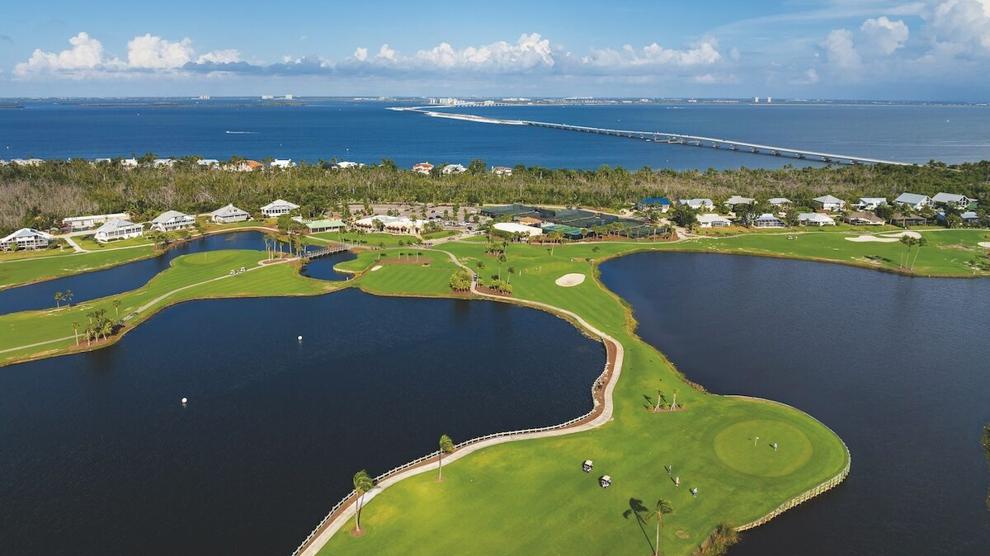
Simmons referred to two Sanibel Island courses that changed hands in 2025. They also changed trajectories after being battered by Hurricane Ian in 2022.
Fort Myers Future paid $3 million in October for the Dunes Country Club on Sanibel. It did so with the vision of integrating golf as an amenity for Calusa Grande, a community of the future that has a development order to take shape on the site of the former Sanibel Outlet shopping center, just east of the Sanibel Causeway. That land is owned by the Dahlmann family.
“Hurricane Ian was the force majeure that changed everything,” says Edgar Wilson, co-founder and managing partner of Calusa Grande. “We went from an outlet mall to where we’re creating housing for workforce.
“The idea was, I wanted amenities like golf and tennis. We didn’t have a place to put it there. My family was involved in building Beach View Golf Club; it looked like it might be able to be acquired. I talked to Mr. Dahlmann, who we worked with on the outlet malls. He said, ‘Why don’t you just buy our golf course?’ Wow, how the conversation has changed. Mr. Dahlmann used to be the largest landowner over on Sanibel. That used to be a good thing. Today, it’s not so good. We went to work. We continued to study and imagine.”
Wilson also had considered buying what originally was known as Beachview but is now known as Sanibel Island Golf Club. But that one sold for $5.6 million in September to Xude Sanibel Golf Partners LLC. Both golf courses will continue to operate.
“They both sold, and then you had a more traditional club with Plantation selling,” Simmons says. “I remember people saying, ‘Nobody’s going to want to golf.’ Some courses have been repurposed. But golf’s not going anywhere as an amenity. I think those operators have gotten their arms around it a little bit better to make it financially feasible for the long term.”
Industrial trend: What’s old is new again
“The industrial revolution in Lee County” took place in 2021 through 2024, said Justin Thibaut, CEO of LSI Companies.
That meant a different type of year in industrial real estate in 2025, with every action creating an equal and opposite reaction.
“We saw a lot of massive distribution facilities and large-scale industrial complexes get built and go online,” Thibaut says of that time. “Immediately after, competitive capital bought those complexes. Since then, we’ve been in supply replenishment mode. All the newer products are coming online.”
This created a window for the smaller deals to abound — deals such as 8046/8050 Ironside Drive, an 8.72-acre parcel LSI Companies brokered for $7 million, to Drake Ready Mix, which plans on building a concrete manufacturing facility there. The $18.72 per square foot set a record, Thibaut said.
B&I Contractors paid $2.5 million in April for 22 parcels totaling about 20 adjacent acres to expand its Fort Myers headquarters with three new buildings.
“This was a year of replenishment of supply, which is evident by the facilities going up,” Thibaut says.
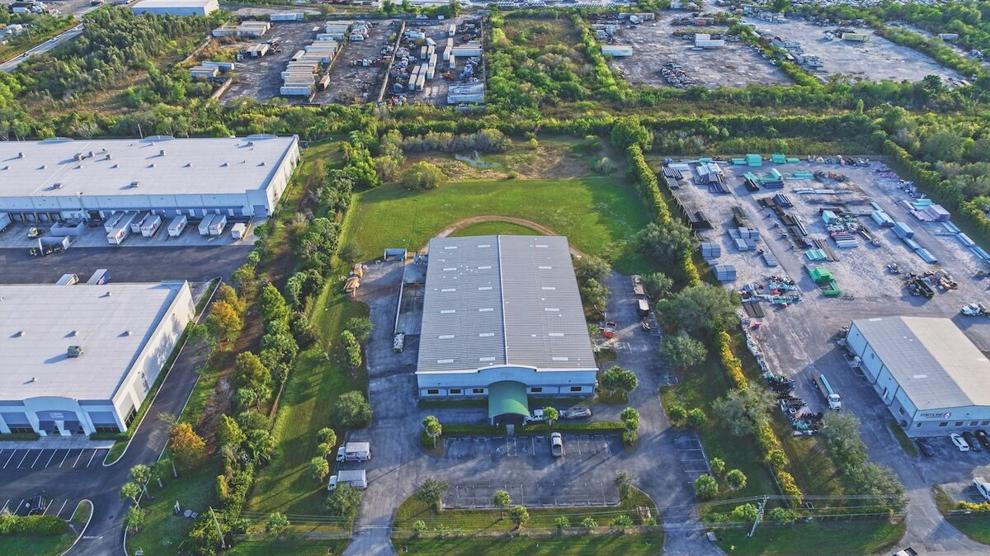
It also meant existing facilities were getting sold, including the 23,750-square-foot warehouse and 5 acres off Laredo Avenue in Fort Myers. It sold for $5.6 million in August. Bob Johnston, Frank Martone and Jerry Messonnier of Lee & Associates brokered that deal. What had been a private water bottle label printing company will be transformed this year into a Gelatys Artisanal Gelato producing facility.
“I would say there’s a definite trend,” Simmons says: “The new industrial properties you’re more likely to see along Interstate 75 or off Alico Road, it’s modern, built-up construction. That stuff, it’s gotten so expensive and we’ve added so much of it that I think there has been a little bit of a backoff in demand. By extension, some of that has cooled a bit. But that’s for the newer stuff.
“What’s interesting to know is the infill areas — central Fort Myers, off Hanson Street and areas of industrial parks that have been around for 30 or 50 years — that product is still seeing increasing lease rates. We have so little industrial right in the middle of population centers. You’ve got to be sensitive to what it’s adjacent to. If you’re looking to lease space that gets you within 10 or 15 minutes of the bulk of rooftops that you service, if you’re an HVAC contractor or a plumber or something like that, having those spaces is really prime,” he says.
“Industrial is seeing both of those trends happening at the same time. The higher priced, newer stuff is not on fire the way it was two years ago. The lower end of the market is still getting pulled up, in part because of all that new product. Newer industrial is $18 to $19 per square foot over the course of an annual lease rate. It’s $14 to $16 for the older stuff.”
SWFL apartment complex deals hit the brakes
In 2025, apartment complex sales in Southwest Florida were few and far between. But for every action, an equal and opposite reaction takes place.
In late October, the apartment market reacted when TerraCap Management LLC, based in Naples, paid $71.5 million to Apex One for West End at City Walk, a 318-unit complex near downtown Fort Myers. Apex One paid $9.7 million more for the same complex four years ago.
TerraCap also paid $1 million for a 1.3-acre parcel northeast of the site, and $500,000 for a 0.45-acre parcel southeast of the apartments.
The seller no longer wanted to contend with rising interest rates, the byproduct of not locking into a fixed rate, said Steve Hagenbuckle, managing partner at TerraCap.
“Peak pricing was four years ago,” Hagenbuckle says. “Part of it sometimes has to do with the seller’s debt structure if they had floating debt with maturity. And the interest rates are double.
“It can create a loss of equity. That would require a significant paydown. Even if you can afford the higher interest rates, at the price it was paid, it makes it a real challenge. Their debt was only for three years. So, they’re facing a maturity. They would have to renew at double the interest rate.”
Apex One’s prospects for mounting losses gave TerraCap an opportunity to make gains in investing, Hagenbuckle said.
“It’s very new,” Hagenbuckle says of City Walk. “It’s four years old. It has the highest level of amenities of any of the properties in the area by far; they’re basically resort-style amenities. They have all kinds of things in there — golf simulators, very spacious fitness centers, a home theater. We feel we have superior amenities to the other ones around there.”
Tyler Minix, managing director of brokerage company Newmark, said he expected the market for apartment complexes to stabilize as 2026 progresses.
“Southwest Florida saw exceptional post-pandemic rent growth, which accelerated after Hurricane Ian as multifamily occupancy and rents rose across Collier, Lee and Charlotte counties,” Minix says. “Strong demand spurred a wave of new apartment construction, resulting in a short-term oversupply.”
The oversupply finally became more apparent in 2025, Minix said.
“In response, owners have introduced concessions and reduced rents by roughly 25% to 30%, pressuring operating performance and, ultimately, asset values,” Minix says. “Looking ahead, we expect the market to stabilize in 2026, supported by continued population growth and historically strong absorption.”
Retail deals matter in Southwest Florida
As with apartments and industrial, deals slowed in volume in 2025. But the ones that went down drew attention.
Daniels Marketplace, a 131,000-square-foot shopping center in south Fort Myers, traded for $72.5 million in December, six years after selling for $49 million. Since then, the center added about 24,000 square feet of space.
Less than a decade ago, the raw land sold for $1.5 million when it was a golf driving range.
“It just firms up that the Daniels corridor and that whole sector of south Fort Myers there, it’s become really the epicenter of that whole corridor,” says Randy Thibaut, who co-owned the land just prior to its development but wasn’t involved in the recent transaction. “And who would have thought that years ago?
“We knew it was a good area. But we didn’t know it would become the epicenter. We knew the property was well-positioned. And the highest-and-best use wasn’t a driving range. There was definitely long-term potential there.”
Seven years after Thibaut acquired his raw piece of land, Sembler bought a parcel. The Gulfport-based company paid $9.2 million for 39.8 acres at the southwest corner of State Road 82 and Daniels Parkway. That is slated to become a shopping center with a grocery store, restaurants and a Home Depot.
Raw land costs much more to the south. In October, Costco Wholesale Corp. paid $19.4 million to Hacienda Lakes of Naples LLC for a 25.86-acre, undeveloped, wooded property on the southeast corner of Collier Boulevard and Rattlesnake Hammock Road.
Luxury real estate thrives in Naples
“For every action, there’s an equal and opposite reaction” held true when comparing the static state of single-family home sales versus the thriving market of ultra-luxury homes in Naples.
One sector stayed static, while the luxury sector accelerated more than any other real estate sector in Southwest Florida.
Denny Grimes, president of Denny Grimes & Team and part of Keller Williams Realty, pulled data for home resales in Lee and Collier County in 2024 and 2025, and found they stayed static year over year.
“In 2024, there were 18,049 single-family homes that closed,” Grimes says. “In 2025 through November, there were 17,185, on track for about 18,000 again.”
In 2021, the market peaked with about 26,000 homes resold in the two-county area. “So, when you look at the volume compared to the peak, it’s down 30% from the peak.”
Grimes broke them down by different pricing categories.
From $1 million to $5 million: “It’s down 24% from peak, and it’s down from last year, as well,” Grimes says.
From $5 million to $20 million: “It’s down; however, when you look at the $10 million-plus market? It’s up. I don’t know what it means. But probably the sweet spot of the hottest segment of the market right now is between $10 million and $20 million, from a percentage growth standpoint. It’s up by 40%. That’s a legitimate jump.
“If you had to be parked in any marketplace right now, there’s more fish biting there than any other sectors of the luxury segments. The volume is incredible.”
Tim Savage has noticed. The Naples real estate agent with Gulf Coast International Properties didn’t just watch as luxury home sales set records in April. He participated by brokering billionaire client David Hoffmann’s purchase of a 17,200-square-foot Port Royal home for $85 million, a record price — at least briefly.
“It’s typically the last to slow down and the first to come back,” Savage says of the ultra-luxury market. “The span between September and mid-October, there was a five-week period where we had six sales in Port Royal, which is typically the slowest month of the year.”
For three years, the record sales price for a single-family home in Naples held at $62 million. The Hoffmann deal broke that record. Then, an undisclosed buyer shattered it days later when purchasing a six-bedroom, 14.5-bathroom, 8,846-square-foot home off Gordon Drive for $225 million. The price tag included two other properties flanking the main residence and about 800 feet of combined beachfront.
The sale anchored the ultra-luxury home market’s status, Grimes said.
“The 13 transactions we’ve had in 11 months ties the record year we had in 2022,” Grimes says of homes priced $20 million and higher. “You’re looking at a combined value of $512 million in 2025 through 11 months. Which is roughly double of what was done last year: $266 million; $380 million was the closest year in 2022.
“Volume’s up 92%. What’s throwing that off is that one big deal.”
The Hoffmann home, now a distant second in value, never even went on the market.
“We didn’t even have photos or videos,” Savage says. “I literally got the photos back the night I put it under contract with David [Hoffmann]. I was in Amsterdam with my daughter. It was 1 a.m. my time over there. I was on vacation, having a beverage and cranking out an $85 million deal. It was amazing.”
Kingston closing resonates as land deal of 2025
Whereas Hoffmann paid $85 million for one home, Joe Cameratta’s company paid $92.8 million for 2,700 lots for future homes.
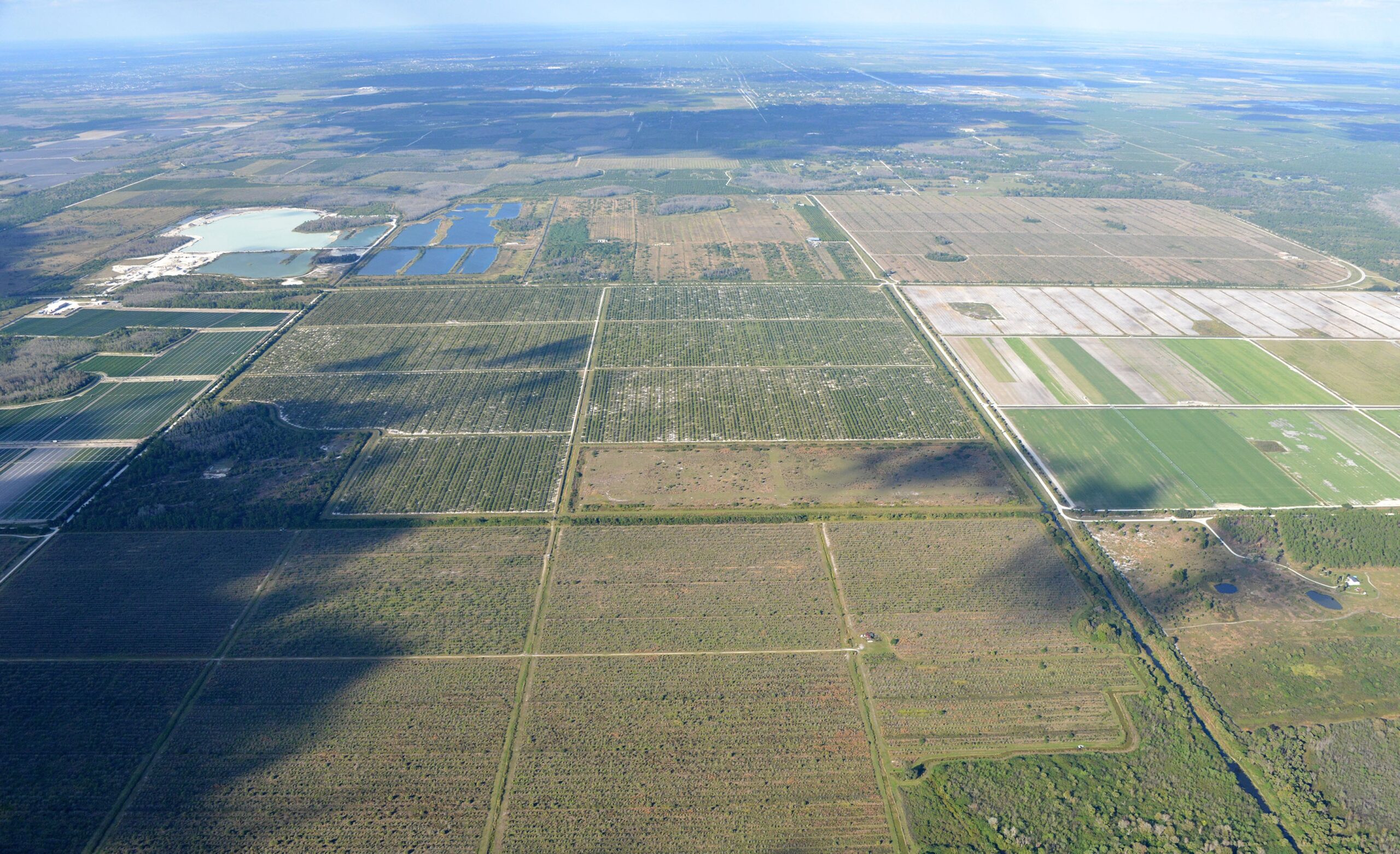
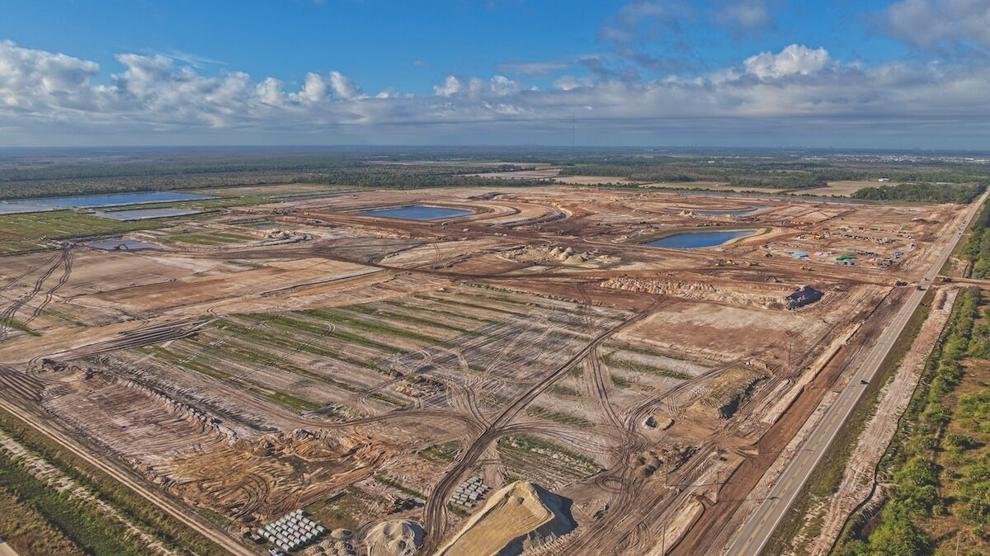
Kingston began to take shape in 2025, and it began with the top land deal of the year, as Cameratta Companies acquired 2,700 acres at the southeastern stretch of Corkscrew Road in June from Texas-based King Ranch.
Cameratta has the land for Phase Two of Kingston under contract and could close on that in 2026.
What had been an abandoned citrus farm and other agricultural lands will become a master-planned community of the future, one that eventually will number 10,000 homes that will take shape over the next couple of decades.
Cameratta’s team worked with Philip Mullett, vice president of real estate and corporate development at King Ranch, on consummating the deal. A transaction of that magnitude didn’t happen overnight — it took about 12 months.
“Usually, it’s somewhere in between,” Cameratta says of negotiations. “They’re not getting exactly what they want, and we’re not getting exactly what we want, either.”
Don’t be deceived by the price, either, he said. Unlike Lennar Homes, one of the builders under contract at Kingston, everything’s not included in purchasing the land.
“We paid $900,000 in wetland mitigation,” Cameratta says. “There was $3.8 million in panther mitigation. There were consultants and all the legwork that had to be done. Environmental testing. Soil testing; that was around $5 million. And then you had another $2,000 per lot that had to be paid to the county for road widening and another $200 a lot for panthers per home transaction in perpetuity. And another $1.1 million for the Florida Foundation for Panther Studies.”
Cameratta said the startup costs before breaking ground on the homes — models should be ready by spring — require a lot more funding than just the land purchase price.
“The reality is, when you get it all in, it’s about $118 million,” Cameratta says. “When you put in all the fees and legal and environmental … we did market studies and appraisals to justify it all.”
Over the past decade, Cameratta Companies has bought legacy farmland and converted it to housing all along the Corkscrew Road corridor, east of I-75. Each project led to the next, culminating with Kingston.
In the world of real estate, every action can have an opposite and equal reaction. For Cameratta, that’s meant bucking the trend. He has national builders coming his way to Kingston, but he’s not beholden to their financial model. His 10-employee, family-owned company is doing it the old-school way.
“When I started my company 40 years ago, we went to a little savings and loan,” Cameratta says. “Today, that just doesn’t exist. It’s all national builders. It’s all Wall Street money. It’s all private equity. I don’t use it. But that’s all that’s out there these days.”